

Introduction
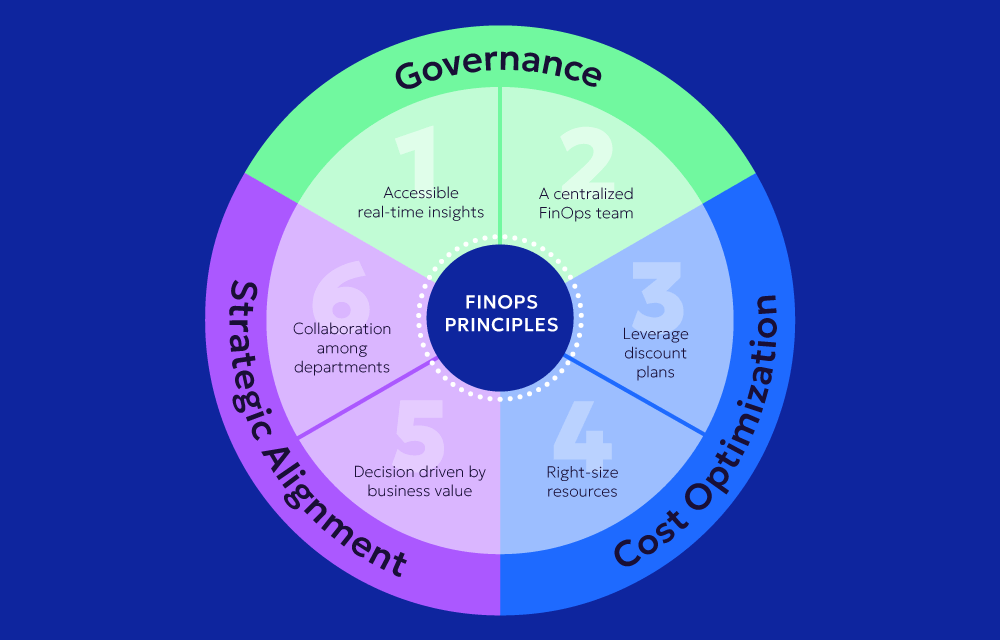
Modern analytics runs on elastic cloud platforms. Teams can spin up clusters, run heavy transformations, and train models in hours rather than weeks. The trade-off is cost uncertainty. Compute charges grow quietly when jobs are inefficient, resources are over-provisioned, or development environments are left running. FinOps—short for Financial Operations—brings structure to this problem by aligning engineering, finance, and business teams around cloud spending decisions. If you are learning cloud-based analytics through a data analytics course, FinOps concepts help you build solutions that are not only correct, but also cost-aware and scalable.
What FinOps Means for Analytics Workloads
FinOps is not just “reducing the bill.” It is a set of operational principles and practices that help teams understand, control, and optimise cloud costs without slowing down delivery. Analytics platforms are especially suited to FinOps because they often involve variable compute: daily pipelines, ad-hoc queries, dashboards with unpredictable usage, and experimentation workloads that spike.
In analytics, costs usually concentrate in a few places:
- Data warehouse compute for queries and transformations
- Processing clusters for ETL/ELT (Spark, managed notebooks, batch jobs)
- Orchestration and supporting services that run continuously
- Data movement and storage patterns that increase compute time
FinOps focuses on transparency (who spent what, and why), accountability (who owns which costs), and optimisation (how to reduce waste while maintaining performance).
Principle 1: Visibility and Allocation
You cannot manage what you cannot measure. The first FinOps step is creating visibility into cloud analytics spend. This includes:
- Tagging and chargeback/showback: Apply consistent tags for team, project, environment (dev/test/prod), and workload type (pipeline, dashboard, ad-hoc). Then allocate costs back to owners. Even if you do not charge teams directly, showing them the spend changes behaviour quickly.
- Cost dashboards: Build a lightweight cost dashboard that tracks daily compute spend, top queries/jobs by cost, and month-to-date trends. Many cloud tools provide this natively, but the key is ensuring the analytics team actually reviews it.
- Unit economics: Translate costs into business-relevant units, like cost per dashboard refresh, cost per 1,000 queries, or cost per pipeline run. This makes optimisation decisions easier to justify.
Learners in a data analyst course in Pune often focus heavily on building dashboards and pipelines. Adding cost visibility to those deliverables creates a more industry-ready skill set.
Principle 2: Optimise Workload Efficiency Before Negotiating Pricing
Cost optimisation is most effective when you improve workload efficiency first. Negotiating discounts or buying committed-use capacity can help, but it cannot fix wasteful design. In analytics, efficiency improvements often come from a few predictable areas:
- Query optimisation: Reduce full table scans, avoid unnecessary joins, and filter early. Encourage partitioning and clustering strategies that match query patterns.
- Right-sizing compute: Many teams run everything on “large” clusters. Instead, match resources to workload: smaller clusters for light transformations, larger clusters only for peak batch windows.
- Job scheduling and concurrency control: Run heavy pipelines in off-peak windows, limit runaway concurrency, and prevent multiple teams from triggering expensive workloads simultaneously.
- Data model choices: A clean semantic layer, well-designed star schema, or pre-aggregated tables can cut query time dramatically. Faster queries usually mean lower compute cost.
A practical exercise taught in a data analytics course can be: take a slow dashboard query, measure the cost impact, and then refactor the data model or query approach to reduce both runtime and spend.
Principle 3: Governance Without Blocking Delivery
FinOps is not meant to become a “cost police” function. Governance should guide decisions and prevent accidents, while keeping teams productive.
Effective governance patterns include:
- Budgets and alerts: Set thresholds for projects and environments. Alerts should be actionable and routed to owners, not ignored in a generic inbox.
- Guardrails for dev/test: Automatically stop idle clusters, enforce time-to-live for temporary environments, and limit maximum instance sizes for non-production.
- Standard templates: Provide approved patterns for pipelines, warehouses, and orchestration. This reduces ad-hoc setups that become expensive over time.
- Review process for large changes: For major workload expansions, require a short cost impact assessment. Keep it lightweight: expected usage, projected spend, and optimisation plan.
Principle 4: Continuous Improvement Through Cost-Performance Trade-offs
FinOps works best as an ongoing cycle: inform, optimise, operate. In analytics, optimisation is not a one-time activity because data volume, user behaviour, and product priorities change.
Continuous improvement looks like:
- Monthly “top spenders” review: Identify the most expensive queries, jobs, or clusters and improve one or two each cycle.
- Cost-performance SLAs: Define acceptable ranges, such as “dashboard refresh under 30 seconds at under X cost per day.”
- Experiment with caching and materialisation: Use result caching, incremental processing, and materialised views where they fit. The goal is to reduce repeated compute for repeated questions.
- Education and shared ownership: Make cost a shared metric alongside latency and data quality. This is where training matters—especially for teams hiring graduates from a data analyst course in Pune who can contribute with both technical and cost-conscious thinking.
Conclusion
FinOps principles help analytics teams manage cloud compute costs without sacrificing speed or innovation. By improving visibility, allocating costs to owners, optimising workload efficiency, and setting sensible governance guardrails, teams can prevent waste and make smarter scaling decisions. The real value of FinOps in analytics is balance: delivering fast insights while keeping compute spending predictable and justified. When these practices are built into day-to-day analytics work—often reinforced through a data analytics course—cloud platforms become a sustainable foundation rather than an unpredictable expense.
Contact Us:
Business Name: Elevate Data Analytics
Address: Office no 403, 4th floor, B-block, East Court Phoenix Market City, opposite GIGA SPACE IT PARK, Clover Park, Viman Nagar, Pune, Maharashtra 411014
Phone No.:095131 73277


